



Cooking technology has evolved dramatically over the past century, from open hearths and wood-fired ovens to gas ranges, electric stoves, and microwave ovens. Among the most recent and intriguing innovations is far infrared cooking—a method that uses invisible radiant heat to cook food faster, more evenly, and with less energy than traditional methods. While the concept may sound futuristic, far infrared cooking is already widely used in commercial bakeries, food processing plants, and increasingly in home kitchens.
This guide provides a comprehensive introduction to far infrared cooking, covering the science behind the technology, how it differs from conventional cooking methods, its advantages and limitations, the types of equipment available, which foods benefit most, and practical tips for getting started. Whether someone is a home cook curious about new kitchen technology or a food industry professional evaluating production equipment, this article covers everything needed to understand and make the most of far infrared cooking.
Key Takeaways
Direct radiant heat. Far infrared cooking heats food directly through molecular resonance, not by heating the surrounding air first.
Faster and more even. Food cooks 20-50% faster with more uniform heat distribution, reducing hot spots and uneven cooking.
Energy efficient. Far infrared cooking systems typically consume 30-50% less energy than conventional ovens.
Better food quality. Shorter cooking times preserve more nutrients, retain moisture, and produce excellent browning and crust texture.
Versatile applications. Suitable for baking, roasting, drying, toasting, reheating, and commercial food processing at scale.
What Is Far Infrared Cooking?
To understand far infrared cooking, it helps to start with the electromagnetic spectrum. Infrared radiation is a form of electromagnetic energy with wavelengths longer than visible light but shorter than microwaves, ranging from approximately 780 nanometers to 1 millimeter [source]. The infrared band is further divided into near infrared (0.75–1.4 μm), short-wavelength infrared (1.4–3 μm), mid-wavelength infrared (3–8 μm), long-wavelength infrared (8–15 μm), and far infrared (15–1000 μm).
Far infrared cooking specifically utilizes the far infrared portion of the spectrum, typically wavelengths between 3 and 1000 micrometers depending on the emitter temperature. When far infrared radiation strikes food, it is absorbed by the food's molecules—particularly water, fats, and proteins—causing them to vibrate at the molecular level. This molecular vibration generates heat directly within the food, rather than relying on hot air to transfer heat from the outside in. The result is a cooking process that is faster, more uniform, and more energy-efficient than conventional methods.
It is important to note that far infrared radiation is non-ionizing, meaning it does not have enough energy to alter the molecular structure of food or make it radioactive. It is the same type of heat that people feel from the sun or a glowing fire, just produced electrically and controlled precisely for cooking purposes.
How Far Infrared Cooking Works
The core principle of far infrared cooking is radiant heat transfer. Unlike a conventional oven, which uses heating elements to warm the air inside the cavity and then relies on that hot air to cook food through convection and conduction, a far infrared cooking system uses specialized emitters that produce infrared radiation directly. This radiation travels through the air without significantly heating it and is absorbed by the food upon contact.
The Heating Process Step by Step
Energy conversion: Electrical energy passes through a resistive heating element (often a ceramic or quartz tube with a metallic filament), raising its temperature to 400–800°C depending on the design.
Radiation emission: The hot element emits far infrared radiation. According to Wien's displacement law, the peak emission wavelength shifts to shorter wavelengths as temperature increases. At 500°C, the peak is around 4 micrometers, which falls in the mid-to-far infrared range ideal for cooking.
Radiation absorption: When infrared radiation reaches the food, it penetrates the surface to a depth of 1–5 millimeters and is absorbed by water molecules, fats, and proteins. This absorption causes molecular vibration and friction, generating heat directly within the food.
Conductive spread: Heat generated near the surface then conducts inward to cook the interior, while the surface simultaneously undergoes Maillard browning and caramelization, creating desirable color, flavor, and texture.
Why It Is Faster Than Conventional Cooking
In a conventional oven, heat must travel through three stages: element to air, air to food surface, and food surface to interior. Each stage wastes energy and takes time. Far infrared cooking eliminates the middleman—the radiation goes directly from emitter to food, and the simultaneous surface-and-interior heating means food reaches the target temperature more quickly. Most users report cooking time reductions of 20–50% compared to conventional recipes.
Far Infrared vs. Conventional Cooking: A Comparison
Understanding the differences between far infrared cooking and traditional methods helps users set appropriate expectations and adjust recipes accordingly.
| Aspect | Far Infrared Cooking | Conventional Oven | Microwave |
|---|---|---|---|
| Heat mechanism | Direct infrared radiation + molecular resonance | Hot air convection + conduction | Microwave excitation of water molecules |
| Cooking speed | 20–50% faster | Standard baseline | Fastest for reheating |
| Browning / crust | Excellent (Maillard reaction active) | Good | None (no browning) |
| Energy efficiency | 30–50% less energy | Lower efficiency (heats air) | Efficient for small portions |
| Heat distribution | Very even (radiant + conduction) | May have hot spots | Often uneven (cold spots) |
| Moisture retention | Good (shorter cook time) | Moderate (longer exposure) | Can dry out edges |
| Preheating time | 1–3 minutes | 10–20 minutes | None needed |
| Best for | Baking, roasting, drying, toasting | General baking and roasting | Reheating, steaming, defrosting |
Key Advantages of Far Infrared Cooking
1. Faster Cooking Times
Because infrared energy heats food directly and simultaneously from the surface and just beneath it, cooking times are significantly reduced. Breads that take 25 minutes in a conventional oven may take 15–18 minutes in a far infrared oven. Roasts and casseroles also benefit from reduced cooking time. This speed advantage is particularly valuable in commercial settings where throughput directly impacts profitability.
2. Superior Energy Efficiency
Conventional ovens waste significant energy heating the air inside the cavity and the oven walls, much of which escapes when the door is opened. Far infrared cooking systems convert electrical energy directly into radiant heat that is absorbed by food, with minimal waste. Independent tests and manufacturer data consistently show energy savings of 30–50% compared to conventional electric ovens for equivalent cooking tasks. Over months and years of operation, this translates to substantial cost savings, especially for high-volume commercial kitchens.
3. More Even Heat Distribution
Infrared radiation distributes heat uniformly across the food surface, reducing the hot spots and uneven browning common in conventional ovens. This is especially beneficial for baking sheets of cookies, pastries, or bread rolls, where consistent heat across the entire tray ensures uniform product quality. Commercial far infrared baking lines often feature multiple independently controlled heating zones, allowing precise temperature profiling for different stages of the baking process.
4. Better Food Quality and Nutrition
Shorter cooking times mean less exposure to heat, which helps preserve heat-sensitive nutrients such as vitamin C, B vitamins, and certain antioxidants. The direct radiant heat also promotes excellent Maillard browning and caramelization, creating rich flavors and appealing colors without the need for excessively high temperatures. Meats cooked with far infrared often retain more juices, resulting in tender, moist products with a well-browned exterior.
5. Cleaner and Safer Operation
Far infrared cooking produces no open flame, no combustion byproducts, and no smoke when used correctly. The heating elements are typically enclosed, reducing the risk of burns and fires. Because food cooks faster and at lower effective air temperatures, there is less risk of overcooking or burning. Many commercial systems also feature stainless steel construction that is easy to clean and meets food safety standards.
Types of Far Infrared Cooking Equipment
Far infrared cooking technology is used in a wide range of equipment, from compact countertop appliances to large industrial production lines. Understanding the options helps buyers select the right equipment for their needs.
Countertop Far Infrared Ovens
Compact ovens designed for home kitchens or small food service operations. They typically use quartz or ceramic infrared heating elements and offer capacities ranging from a few liters to 30+ liters. Many combine infrared heating with convection fans for even faster results. These are ideal for small bakeries, cafes, food trucks, and home enthusiasts.
Far Infrared Grills and Griddles
These use infrared emitters positioned above or below the cooking surface to produce intense, even heat similar to a charcoal grill but with precise temperature control. They are popular for commercial kitchens, outdoor cooking, and restaurants seeking consistent grilling results without the variability of open flames.
Industrial Far Infrared Baking Lines
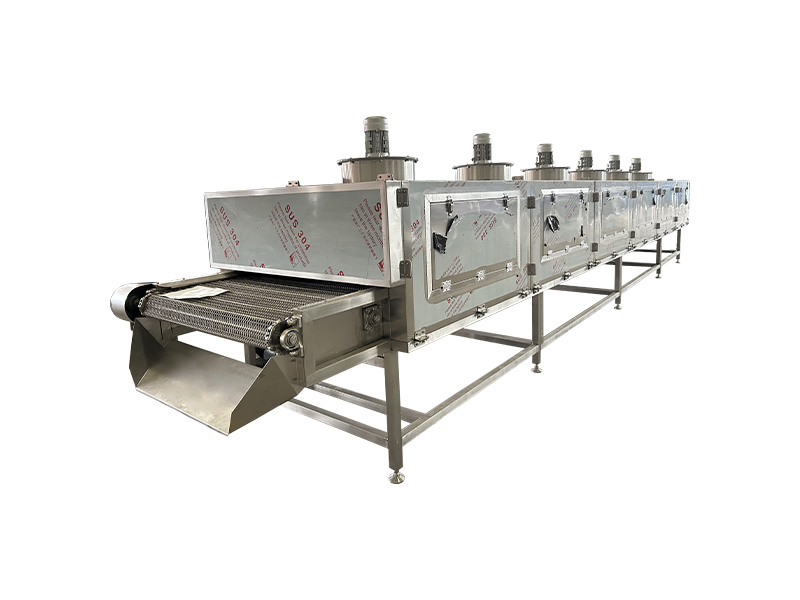
For large-scale food production, continuous far infrared baking lines feature a conveyor belt that carries products through a tunnel equipped with multiple infrared heating zones. Each zone can be independently controlled for temperature and intensity, allowing precise baking profiles for different products. These systems are used by commercial bakeries, snack manufacturers, and food processing plants for products ranging from bread and pastries to crackers, cookies, and cereal bars. Stainless steel construction, mesh or Teflon-coated belts, and PLC-based control systems are standard features in industrial models.
Far Infrared Dryers and Dehydrators
While not strictly "cooking," far infrared dryers use the same radiant heat principle to remove moisture from foods such as fruits, vegetables, herbs, meat jerky, and seafood. Infrared drying is faster than conventional air drying and can better preserve color, flavor, and nutrients due to shorter processing times.
Foods That Shine with Far Infrared Cooking
While far infrared cooking is versatile enough for most foods, certain products benefit particularly well from this technology:
Breads and pastries: The even radiant heat produces uniform rise, excellent crust color, and a tender crumb. Croissants, danishes, and laminated doughs bake with consistent layering.
Cookies and biscuits: Even heat across the baking sheet ensures every cookie is baked to the same degree, with no undercooked centers or burnt edges.
Roasted meats and poultry: The direct heat creates a flavorful browned exterior while the shorter cooking time retains juices and tenderness.
Roasted vegetables: Caramelization happens quickly and evenly, bringing out natural sweetness without sogginess.
Dried fruits and herbs: Infrared dehydration preserves vibrant color and essential oils better than conventional hot-air drying.
Nuts and seeds: Even toasting prevents burning and brings out optimal flavor and aroma.
Pizza and flatbreads: The intense radiant heat mimics the effect of a brick oven, producing a crispy crust with a chewy interior in minutes.
Reheated prepared foods: Far infrared reheating restores crispness and texture that microwaves cannot achieve, making it ideal for leftovers and pre-cooked items.
Practical Tips for Far Infrared Cooking
Getting the best results from far infrared cooking requires some adjustments from conventional methods. The following tips help users achieve consistent, high-quality results:
Temperature and Time Adjustments
Reduce conventional recipe temperatures by approximately 10–20°C (20–40°F) when using a far infrared oven, as the radiant heat is more effective at lower air temperatures.
Check for doneness 20–30% earlier than the conventional recipe time, especially for baked goods. Use a food thermometer for accuracy.
Preheating is much shorter—typically 1–3 minutes for most countertop models. Over-preheating wastes energy and can cause excessive browning.
Cookware and Placement
Use shallow, heat-conductive pans (aluminum, stainless steel, glass) to maximize infrared exposure. Avoid deep, insulated containers that block radiant heat.
Leave space between items on the baking sheet to allow even radiation exposure. Overcrowding can cause uneven cooking.
For delicate items that brown too quickly, use a lower rack position or tent loosely with aluminum foil during the final minutes.
Dark or non-stick coated pans absorb more infrared energy and may cook faster than light-colored pans.
Commercial Production Tips
For continuous baking lines, calibrate each heating zone independently based on product-specific testing. The entry zone may be cooler to set the structure, while middle and exit zones provide browning and finishing.
Monitor belt speed closely—it directly affects how long each product spends in each heating zone. Small adjustments can significantly impact product quality.
Keep infrared emitters clean. Food residue, grease, and dust on emitter surfaces can reduce radiation output by up to 20%.
Use a data logger or infrared thermometer to verify actual product surface temperatures, as oven air temperature does not always reflect the effective radiant heat reaching the food.
Safety Considerations
Far infrared cooking is generally safe, but users should follow basic precautions to avoid injury and ensure optimal performance:
Hot surfaces: Infrared emitters and oven interiors reach very high temperatures (400–800°C). Always use oven mitts and avoid touching heating elements, even after the oven is turned off, as they retain heat.
Eye protection: Do not stare directly at glowing infrared emitters for extended periods. While far infrared is not as damaging as UV, prolonged direct viewing of intense heat sources can cause eye discomfort.
Ventilation: Ensure adequate kitchen ventilation, especially when cooking high-fat foods that may produce smoke or vapors. Commercial installations should comply with local fire and ventilation codes.
Electrical safety: Industrial far infrared cooking systems draw significant electrical power. Ensure proper wiring, grounding, and circuit capacity. Follow manufacturer guidelines for installation and maintenance.
Food safety: Use a food thermometer to verify that foods reach safe internal temperatures. The faster cooking speed of infrared ovens can sometimes lead users to remove food before it is fully cooked.
Maintenance: Regularly clean emitters, reflectors, and cooking chambers. Inspect wiring and connections periodically. Follow the manufacturer's maintenance schedule for commercial equipment.
Limitations and Considerations
While far infrared cooking offers many advantages, it is not the perfect solution for every cooking task. Understanding its limitations helps users make informed decisions:
Limited penetration depth: Far infrared penetrates only 1–5mm into food. Very thick items still rely on conduction for interior cooking, so the speed advantage diminishes for large roasts or thick loaves.
Not ideal for slow cooking: Methods requiring long, slow, moist heat (such as braising or stewing) are better suited to conventional ovens or slow cookers. Infrared excels at dry-heat cooking methods.
Equipment cost: High-quality far infrared ovens, especially commercial models, can be more expensive upfront than conventional ovens. The energy savings and productivity gains typically offset this over time.
Learning curve: Users accustomed to conventional ovens need to adjust temperatures and times. It may take several batches to dial in optimal settings for specific recipes.
Size limitations: Countertop models have limited capacity. For large-batch production, industrial conveyor systems are required, which demand significant floor space and dedicated electrical infrastructure.
Looking for a Reliable Far Infrared Cooking System Manufacturer?
XINYE manufactures industrial far infrared baking lines and cooking systems with SUS304 stainless steel construction, multi-zone temperature control, conveyor belt systems, and PLC automation. Custom configurations available for bakeries, snack plants, and food processing facilities.
Request a Free Quote →Factory direct pricing · Custom line configuration · Global shipping · Installation and training support
Conclusion
Far infrared cooking represents a significant advancement in food heating technology, offering faster cooking times, superior energy efficiency, more even heat distribution, and better food quality compared to conventional methods. By using far infrared radiation to heat food directly through molecular resonance rather than relying on hot air transfer, this technology eliminates many of the inefficiencies and inconsistencies of traditional ovens.
For home cooks, far infrared ovens provide a versatile tool that excels at baking, roasting, toasting, and reheating with excellent results. For commercial food producers, industrial far infrared baking lines offer consistent product quality, higher throughput, and lower operating costs—critical advantages in competitive food manufacturing markets. While the technology has limitations and requires some adjustment from conventional methods, the benefits in speed, efficiency, and quality make it a compelling choice for a wide range of cooking applications.
As with any equipment investment, the key to success is selecting the right system for the specific application, following manufacturer guidelines for operation and maintenance, and taking the time to optimize recipes and settings for the unique characteristics of far infrared heat. With proper implementation, far infrared cooking can deliver measurable improvements in both product quality and operational efficiency.
Frequently Asked Questions
Q: What is far infrared cooking?
A: Far infrared cooking uses far infrared radiation (wavelengths 15–1000 micrometers) to heat food directly. Unlike conventional ovens that heat air first, infrared energy is absorbed by food molecules, causing them to vibrate and generate heat from within, resulting in faster and more even cooking.
Q: Is far infrared cooking healthy?
A: Yes. Far infrared cooking is considered safe and healthy. It cooks food faster, reducing nutrient loss from prolonged heat exposure. It also requires less oil and produces fewer harmful compounds compared to high-temperature open-flame cooking. The radiation is non-ionizing and does not make food radioactive.
Q: How is far infrared cooking different from microwave cooking?
A: Microwaves use much longer wavelengths (~12 cm) that excite water molecules only, cooking from the inside out but often unevenly. Far infrared uses shorter wavelengths (15–1000 micrometers) that penetrate food surfaces and heat through molecular resonance, creating a browning effect similar to conventional baking but much faster.
Q: What foods cook best with far infrared?
A: Far infrared cooking excels at baking bread, pastries, cookies, roasting meats and vegetables, drying fruits and herbs, toasting nuts and grains, and reheating prepared foods. It produces excellent crust and browning while retaining moisture inside.
Q: Does far infrared cooking save energy?
A: Yes. Far infrared cooking systems typically use 30–50% less energy than conventional ovens because they heat food directly rather than warming the surrounding air. Preheating time is also significantly shorter, and the cooking process itself is faster.
Q: Can I use regular cookware in a far infrared oven?
A: Most standard oven-safe cookware works well, including glass, ceramic, metal, and silicone. However, for best results, use shallow, heat-conductive pans that allow infrared energy to reach food surfaces. Avoid thick, insulated containers that block radiant heat.
Q: How much does a commercial far infrared baking line cost?
A: Commercial far infrared baking lines vary widely in cost depending on size, capacity, features, and customization. Basic models start around $10,000–$20,000, while large multi-zone industrial lines with PLC control and conveyor systems can range from $30,000 to over $100,000. Buyers should request custom quotes based on specific production requirements.
Q: How do I clean and maintain a far infrared oven?
A: Allow the oven to cool completely before cleaning. Wipe interior surfaces with a damp cloth and mild detergent. Clean infrared emitters gently with a soft brush to remove food residue—avoid abrasive cleaners that can damage the emitter coating. For commercial equipment, follow the manufacturer's maintenance schedule, including regular inspection of electrical connections, belt tension, and calibration of temperature sensors.


 Phone: