



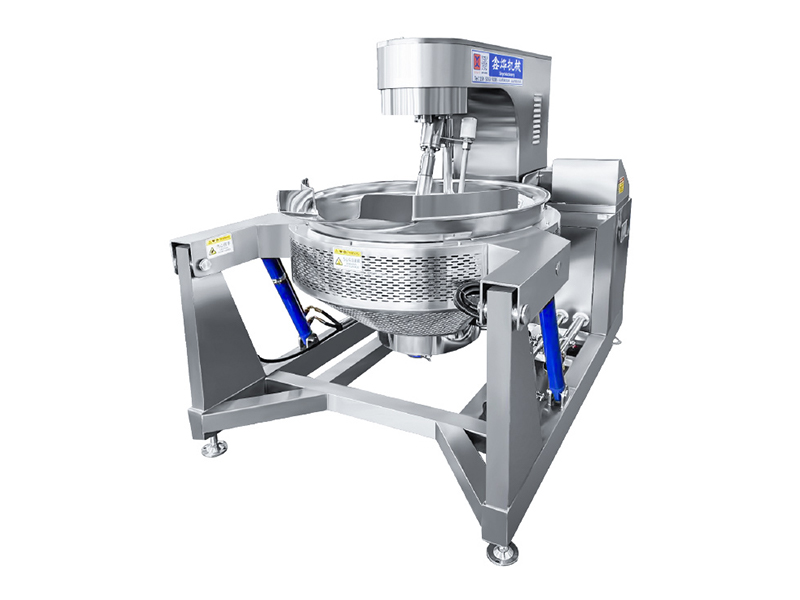


This article is written by XINYE Machinery, a manufacturer specializing in industrial cooking mixer solutions.
Key Takeaways
Steam jacketed kettles provide uniform heating through indirect heat transfer, preventing product scorching and ensuring consistent quality
Capacity ranges from 50 to 1000 liters serve different production scales, from small batches to industrial operations
Proper agitation systems eliminate dead zones and prevent burn-on for viscous products
Steam pressure between 0.2-0.6 MPa delivers optimal cooking temperatures of 120-150°C for most food applications
Regular maintenance of steam traps, gaskets, and pressure relief valves ensures safety and operational efficiency
What Is a Steam Jacketed Kettle and Why Does It Matter
A steam jacketed kettle represents essential cooking equipment in modern food processing facilities. The equipment features a double-wall construction where steam circulates between the inner cooking vessel and outer jacket, delivering gentle and uniform heat distribution to the product inside.
When first introducing the XINYE steam jacketed kettle, manufacturers immediately recognize its advantage over direct-fire cooking methods. The indirect heating mechanism prevents hot spots that cause product scorching, particularly critical when processing delicate sauces, dairy products, or sugar-based confections.
The kettle operates through a simple yet effective principle. Steam enters the jacket space at controlled pressure, typically ranging from 0.2 to 0.6 MPa. As the steam condenses on the inner wall surface, it releases latent heat that transfers through the stainless steel wall into the product. This condensed water then drains away through steam traps, maintaining consistent temperature throughout the cooking cycle.
Food processors choose this equipment because it solves three fundamental production challenges. First, it eliminates the risk of burning expensive ingredients. Second, it provides precise temperature control essential for maintaining product specifications. Third, it reduces labor costs by automating the stirring and temperature management that manual cooking requires.

Common Applications: What Steam Jacketed Kettles Are Used For
The versatility of a steam jacketed kettle makes it indispensable across multiple food processing sectors. Understanding specific applications helps manufacturers select the right configuration for their production needs.
Sauce and Condiment Production
Sauce manufacturers rely on steam jacketed kettles for producing tomato-based sauces, chili paste, curry bases, and salad dressings. The equipment handles viscosities ranging from thin vinaigrettes to thick concentrated pastes. Temperature control prevents caramelization of sugars in ketchup production while maintaining the bright color of fresh tomato sauces.
According to XINYE's production experience, sauce facilities typically process 200-500 kg batches using 300-600 liter kettles. The planetary cooking mixer configuration works particularly well for thick Asian sauces like doubanjiang or gochujang that require constant scraping to prevent sticking.
Confectionery and Jam Processing
Candy makers use steam jacketed kettles for cooking hard candies, caramels, fudge, and marshmallows. The precise temperature control allows them to reach specific sugar stages without overshooting. Jam producers appreciate how the gentle heating preserves fruit texture and color while concentrating the mixture to the desired consistency.
Fruit jam production requires careful temperature management between 85-95°C to activate pectin without degrading fruit flavors. The kettle's uniform heat distribution ensures complete dissolution of sugar crystals while preventing scorching at the bottom that would create bitter flavors.
Dairy Product Manufacturing
Dairy processors employ steam jacketed kettles for producing cheese sauces, custards, puddings, and dulce de leche. Milk-based products demand exceptionally gentle heating because proteins denature and burn easily at high temperatures. The jacketed design maintains temperatures in the 75-90°C range ideal for dairy processing.
Condensed milk production exemplifies the importance of this equipment. The kettle concentrates milk through controlled evaporation at 80-85°C under vacuum conditions, preserving nutritional value while achieving the desired thick consistency. XINYE machines incorporate vacuum capability for such applications.
Prepared Meal Components
Central kitchens use steam jacketed kettles for batch cooking soups, stews, gravies, and braised meats. Large-capacity kettles of 500-1000 liters serve institutional feeding operations, producing consistent results batch after batch. The equipment integrates well with horizontal mixer systems for products requiring heavy agitation like meat-based sauces.
Soup production demonstrates the efficiency advantage. A 600-liter kettle can produce enough vegetable soup to serve 1500 portions in a single batch, completing the cooking cycle in 45-60 minutes compared to 90+ minutes using conventional pot cooking.
Understanding Different Heating Methods
Manufacturers selecting a steam jacketed kettle must understand the heating source options and how they impact production efficiency, product quality, and operating costs.
Direct Steam Heating Systems
Direct steam systems connect to the facility's central boiler supply. Steam at 0.3-0.5 MPa enters the kettle jacket directly from the steam main. This configuration offers the fastest heating rates and highest production capacity.
The primary advantage lies in rapid temperature response. When the operator increases the steam pressure setting, the product temperature rises within 2-3 minutes. This quick response benefits production schedules requiring multiple different products throughout the day.
However, direct steam systems require existing boiler infrastructure. Facilities without central steam must invest in boiler installation, adding significant capital cost. Additionally, steam quality directly affects product safety. Food-grade steam must meet FDA standards, being free from boiler treatment chemicals that could contaminate products.
Electric Heating Configurations
Electric steam generators create steam within the kettle jacket using electric heating elements. This self-contained system eliminates boiler dependency, making it ideal for smaller operations or facilities lacking steam infrastructure.
Electric systems provide several operational advantages. Installation requires only electrical power connection without complex piping or boiler room coordination. Operators appreciate the simple on-off control and automatic temperature maintenance. Maintenance needs remain minimal since the system contains fewer components than steam boiler systems.
The limitation centers on heating capacity and operating cost. Electric kettles typically max out at 300-400 liter capacity due to power requirements. A 300-liter electric kettle requires 24-36 kW, translating to higher energy costs compared to natural gas-fired steam in most regions. XINYE typically recommends electric systems for operations processing fewer than 500 kg per day.
Gas-Fired Steam Generation
Gas-fired systems incorporate a compact steam generator that burns natural gas or propane to create steam for the jacket. This configuration combines the self-contained convenience of electric systems with the energy efficiency of combustion heating.
Energy efficiency represents the primary advantage. Natural gas provides steam at roughly 40-50% lower operating cost compared to electric heating. The system reaches working temperature in 8-12 minutes, faster than electric but slightly slower than direct steam.
Installation requires gas line connection and proper venting for combustion products. Building codes mandate professional installation and annual inspection of gas-fired equipment. Despite these requirements, many processors find gas-fired kettles offer the best balance of independence, efficiency, and capacity for mid-size operations.
| Heating Method | Heating Speed | Energy Efficiency | Operating Cost | Best For |
|---|---|---|---|---|
| Direct Steam | Fastest (2-3 min) | Excellent (85-90%) | Low | Large facilities with existing boilers |
| Electric | Moderate (15-20 min) | Good (75-80%) | High | Small batches, no steam infrastructure |
| Gas-Fired | Fast (8-12 min) | Very Good (80-85%) | Moderate | Mid-size operations, flexibility needed |
Selecting the Right Capacity for Your Operation
Choosing appropriate kettle capacity directly impacts production efficiency and product quality. Undersized equipment creates production bottlenecks while oversized kettles waste energy and floor space.
Calculating Required Batch Size
Start by determining daily production volume requirements. For example, a sauce manufacturer producing 1200 kg per day with 8-hour shifts should consider batch sizes that allow 3-4 batches per shift. This accounts for heating time, cooking time, cooling, and cleaning between batches.
Working capacity typically equals 75-80% of total kettle volume. A 500-liter kettle safely handles 375-400 liters of product, preventing overflow during mixing and providing expansion space for foaming products. According to XINYE's experience, manufacturers should never exceed 85% working capacity to maintain safety margins and mixing effectiveness.
Small-Scale Production Kettles
Kettles in the 50-150 liter range serve artisanal producers, test kitchens, and specialty food manufacturers. A 100-liter kettle processes 60-75 kg batches suitable for small sauce companies, craft confectioners, or restaurant commissaries producing signature sauces.
These compact units offer flexibility for product development and small batch runs. The relatively small batches allow quick recipe adjustments and minimal waste if formulation changes occur. Floor space requirements remain modest, fitting into tight production areas.
Mid-Range Commercial Kettles
The 200-500 liter capacity range represents the workhorse size for growing food businesses. A 300-liter kettle handles 225-240 kg batches, supporting production volumes from 500-1500 kg per day depending on product complexity and cooking time.
This size bracket offers the best balance of flexibility and efficiency. Manufacturers can dedicate kettles to specific products while maintaining batch sizes large enough for reasonable labor efficiency. XINYE planetary cooking mixers in this range incorporate tilting mechanisms for easy discharge and full SUS304 stainless steel construction meeting international food safety standards.
Industrial-Scale Equipment
Large operations processing 2000+ kg daily require kettles from 600-1000 liters. These industrial units process 450-800 kg per batch, supporting high-volume production of standardized products like commodity sauces, institutional food service items, or retail packaged goods.
Investment in large kettles makes economic sense when production volume justifies the capital cost and when product recipes remain relatively stable. The per-kilogram processing cost decreases significantly at this scale due to labor efficiency and optimized energy usage. However, changeover cleaning and downtime between products increases with kettle size.
Need Expert Guidance on Steam Jacketed Kettle Selection?
XINYE's engineering team helps you match equipment specifications to your exact production requirements. Share your product details and capacity needs for a customized recommendation.
Request Free ConsultationAgitation Systems: Preventing Burn-On and Dead Zones
The mixing system integrated with a steam jacketed kettle determines product quality and cooking efficiency. Different products require specific agitation approaches to prevent scorching and ensure uniform cooking.
Fixed vs. Tilting Kettle Designs
Fixed kettles discharge products through bottom valves, suitable for thin liquids like soups and broths that flow easily. The stationary design allows stronger mixing systems and higher working capacities since the kettle doesn't require balance for tilting.
Tilting kettles incorporate a trunnion mechanism allowing the vessel to pivot 90-110 degrees for product discharge. This design proves essential for thick or viscous products that won't flow through bottom valves. Manual tilt systems work adequately for smaller kettles up to 200 liters, while powered tilt becomes necessary for larger units where product weight makes manual operation impractical.
Planetary Agitation Technology
XINYE planetary cooking mixer systems feature blades that simultaneously rotate on their own axis while orbiting the kettle center. This dual-motion design creates thorough mixing without dead zones, critical for preventing burn-on with thick products.
The planetary motion ensures scraper blades contact every square centimeter of the kettle bottom and walls. Viscous products like bean paste, nut butters, or concentrated fruit preserves require this complete coverage. Without it, stationary areas develop hot spots where product burns and sticks, contaminating the entire batch.
According to XINYE's field experience, planetary systems reduce batch rejection rates by 40-60% when processing thick sauces compared to simple anchor agitators. The elimination of burn-on translates directly to ingredient cost savings and reduced cleaning time between batches.
Anchor and Sweep Agitators
Anchor-style agitators consist of a frame matching the kettle shape with scrapers that sweep the walls and bottom. These systems work well for medium-viscosity products like gravies, light sauces, and dairy-based items that flow moderately well.
The simplicity of anchor designs offers maintenance advantages. Fewer moving parts mean reduced wear and straightforward repairs. However, the single-axis rotation creates some mixing blind spots, particularly in the kettle center. Products requiring complete homogenization may show inconsistent results.
High-Shear Mixing Systems
Some products demand intense mechanical action to create emulsions or break down particles. High-shear mixers incorporate rapidly spinning blades or rotor-stator assemblies generating powerful mixing forces.
Salad dressing production exemplifies high-shear requirements. Creating stable oil-in-water emulsions requires breaking oil droplets to microscopic sizes through intense mechanical action. The horizontal mixer configuration serves such applications well, combining planetary scraping with high-speed dispersing heads.
XINYE designs integrate both gentle sweeping and high-shear capability in dual-agitation systems. The sweep scrapers prevent wall deposits while the high-speed mixer creates product homogeneity. This combination proves particularly effective for complex sauces containing both oil and particulate ingredients.
Temperature Control and Process Automation
Precise temperature management separates excellent product quality from inconsistent results. Modern steam jacketed kettle systems incorporate sophisticated controls that maintain cooking parameters automatically.
Manual Control Systems
Basic kettles employ manual steam valves allowing operators to adjust heat input. The operator monitors product temperature using thermometers and adjusts the valve position to maintain desired cooking temperature. This approach requires constant attention but offers maximum simplicity and low initial cost.
Manual systems work adequately for experienced operators producing familiar products repeatedly. However, batch-to-batch consistency depends entirely on operator skill and attention. Training new staff takes considerable time, and distraction during cooking can lead to overheating or extended cooking times affecting product quality.
Automatic Temperature Controllers
Temperature controllers maintain product temperature within narrow ranges automatically. The controller receives input from a temperature probe inserted in the product and modulates steam valve position to maintain the setpoint.
Typical food processing operations require ±2-3°C temperature accuracy. Quality controllers achieve ±1°C precision, essential for products with critical temperature specifications like custards that curdle if overheated or candies that fail to set properly if undercooked.
XINYE incorporates Siemens PLC controllers in premium systems, providing both temperature regulation and recipe storage capabilities. The controller remembers heating profiles for different products, automatically executing multi-step cooking sequences without operator intervention.
Recipe Management Programs
Advanced systems store complete recipe programs including heating rates, holding temperatures, mixing speeds, and process times. The operator simply selects the product name and initiates the cycle. The system then automatically manages all parameters from start to finish.
Recipe programming eliminates operator variability, the primary cause of batch-to-batch quality differences. A salsa manufacturer processing twelve different SKUs benefits tremendously from recipe storage. Each formulation requires specific cooking temperatures and times; automated recipes ensure perfect execution every batch.
Data logging capability provides another advantage. The system records temperature, pressure, and time data throughout each batch. This documentation supports food safety requirements and helps identify process problems when quality issues arise. XINYE systems include USB data export for long-term record keeping.
Pressure and Safety Interlocks
Steam jacket pressure monitoring protects both equipment and product. Excessive jacket pressure stresses the vessel and potentially damages the kettle structure. Pressure relief valves provide mechanical protection, but electronic pressure monitoring adds another safety layer.
Modern systems incorporate safety interlocks preventing operation if conditions fall outside safe parameters. If jacket pressure exceeds the safe limit, the system shuts off steam supply and sounds an alarm. If product temperature sensors fail, the controller stops heating to prevent overheating.
These interlocks prevent the most common causes of kettle damage and product loss. A failed temperature sensor could cause runaway heating, ruining thousands of dollars of product. Automatic shutdown when sensor failure occurs eliminates this risk.
Material Construction and Sanitation Design
Material selection and construction quality determine equipment lifespan and maintenance requirements. Food safety regulations mandate specific material standards that reputable manufacturers follow.
Stainless Steel Grades
SUS304 stainless steel represents the minimum acceptable grade for food contact surfaces. This austenitic stainless steel resists corrosion from most food acids and cleaning chemicals. The smooth surface finish prevents product adhesion and facilitates thorough cleaning.
SUS316 stainless steel offers superior corrosion resistance for highly acidic products or chloride-containing foods. Tomato-based sauces with their low pH and salt content benefit from 316 construction. The additional cost typically adds 15-20% to kettle price but extends service life significantly in corrosive applications.
XINYE constructs all product-contact surfaces from food-grade stainless steel meeting international sanitary standards. The inner kettle surface receives mirror polishing to Ra 0.4-0.6 micrometers, eliminating microscopic crevices where bacteria could harbor.
Welding and Joint Construction
Weld quality directly impacts sanitation and equipment longevity. Food-grade equipment requires full-penetration welds that eliminate gaps or crevices. Poor welding creates bacteria harboring points and potential failure locations.
TIG welding produces clean, smooth joints meeting sanitary design standards. The process uses inert gas shielding to prevent oxidation, creating smooth weld beads that polish to match the base metal finish. Internal welds receive particular attention since operators cannot easily inspect them after installation.
According to XINYE's manufacturing standards, all kettle body welds undergo pressure testing before final assembly. This quality control step identifies potential leak points before the unit ships, preventing costly field repairs and production downtime.
Sanitary Design Features
Sanitary design principles eliminate product accumulation areas and simplify cleaning. Sloped bottoms ensure complete drainage without pockets where product could remain. Self-draining piping prevents liquid accumulation in connection points.
Agitator shaft seals represent a critical design element. Product can leak past poorly designed seals, contaminating the kettle interior and potentially creating safety hazards. Quality equipment uses double mechanical seals with barriers preventing product migration.
Clean-in-place capability becomes essential for large kettles where manual cleaning proves impractical. CIP systems circulate hot water and cleaning solutions through spray balls, removing product residue without disassembly. XINYE can integrate CIP connections as standard equipment on kettles above 300-liter capacity.
Insulation and External Finish
Jacket insulation conserves energy and protects operators from burns. Quality insulation reduces heat loss by 60-70%, significantly lowering steam consumption. Mineral wool or ceramic fiber insulation wrapped around the jacket maintains exterior surface temperatures below 45°C even with 150°C internal temperatures.
The exterior shell covering the insulation should use stainless steel rather than painted carbon steel. Painted surfaces chip and rust in food processing environments with frequent washdowns. Stainless steel exteriors maintain appearance and cleanliness for decades of service.
Installation Requirements and Utility Connections
Proper installation ensures safe operation and optimal performance. Understanding utility requirements helps manufacturers plan facility modifications before equipment arrives.
Floor Space and Structural Requirements
A 300-liter tilting kettle requires approximately 2.5 x 2.5 meters of floor space including operator access area. Larger kettles need proportionally more space for tilting clearance and maintenance access. Ceiling height should allow 500mm clearance above the kettle for ingredient addition and cleaning access.
Floor loading calculations account for equipment weight plus maximum product capacity. A 500-liter kettle filled with dense product like meat sauce weighs 900-1100 kg total. Most concrete floors handle this loading easily, but older facilities with wooden floors may require reinforcement.
Steam Supply Specifications
Direct steam kettles require properly sized steam lines delivering adequate flow at working pressure. A 400-liter kettle typically consumes 40-60 kg/hour of steam during heating, requiring a 25-32mm supply line. Undersized piping restricts flow and extends heating times.
Steam pressure regulation protects the kettle jacket rated for maximum working pressures between 0.3-0.6 MPa. Pressure reducing valves maintain safe jacket pressure regardless of boiler house supply pressure variations. Installation should include pressure gauges visible to operators for monitoring.
Condensate return piping removes water from the jacket to maintain heating efficiency. Steam traps installed at low points automatically drain condensate while preventing steam escape. According to XINYE installation guidelines, condensate lines should slope 1:100 minimum toward the collection point preventing water accumulation.
Electrical Requirements
Powered agitators and tilt mechanisms require three-phase electrical supply. Motor power ranges from 1.5-5.5 kW depending on kettle size and agitation type. Heavy-duty planetary mixers driving large kettles need 5-7.5 kW to handle high-viscosity products.
Control panels should connect to isolated circuits preventing nuisance tripping from other equipment. Modern PLC controllers contain sensitive electronics requiring clean power for reliable operation. Surge protection devices guard against voltage spikes from nearby motor starts.
Water and Drainage Connections
Cold water supply supports CIP systems and kettle cooling after cooking. Flow rates of 15-25 liters/minute suffice for most cleaning operations. Hot water connections accelerate cleaning by improving detergent effectiveness.
Floor drains should position within 1.5 meters of the kettle to handle CIP discharge and occasional spills. Drain capacity must handle peak flows during kettle flushing without flooding. XINYE recommends 75-100mm drains for production areas with multiple kettles.
Maintenance Best Practices for Long Service Life
Regular maintenance prevents unexpected failures and extends equipment lifespan. Well-maintained steam jacketed kettles operate reliably for 15-20 years, while neglected equipment fails prematurely.
Daily Cleaning Procedures
Immediate cleaning after each production run prevents product buildup and bacterial growth. The cleaning sequence starts with a cold water rinse removing loose product residue. Hot water with alkaline detergent follows, breaking down fats and proteins.
Scraper blades require particular attention since product residue accumulates along edges. Manual scrubbing with soft bristle brushes removes deposits without scratching the stainless steel surface. Harsh abrasives damage the polish, creating rough areas where bacteria colonize.
According to XINYE's service recommendations, operators should inspect gaskets and seals during daily cleaning. Damaged gaskets allow product leakage and steam escape. Early detection prevents minor problems from becoming major repairs.
Weekly Maintenance Tasks
Steam trap inspection prevents condensate accumulation degrading heating performance. Traps should discharge condensate freely without passing live steam. Failed traps either flood the jacket with water or waste steam, both reducing efficiency significantly.
Agitator drive components need lubrication following manufacturer specifications. Gearboxes typically use food-grade lubricating oil changed every 2000-3000 operating hours. Bearing points require greasing every 40-50 operating hours preventing wear and noise.
Control system verification ensures accurate temperature regulation. Compare controller readings against calibrated thermometer measurements. Drift exceeding ±3°C indicates sensor problems requiring replacement before product quality suffers.
Monthly Inspection Points
Pressure relief valve testing confirms proper safety system operation. Manually operate the test lever to verify free movement and proper reseating. Stuck or leaking relief valves compromise safety and require immediate replacement.
Electrical connections should show no signs of overheating, corrosion, or looseness. Thermal imaging cameras identify hot spots indicating poor connections before failure occurs. Tighten terminals and clean corrosion promptly to prevent electrical fires.
Mechanical wear inspection covers scraper blade condition and alignment. Worn blades fail to maintain kettle wall contact, allowing product burn-on. XINYE scraper blades typically last 6-12 months depending on product abrasiveness and operating hours.
Annual Service Requirements
Complete agitator disassembly allows thorough inspection of bearings, seals, and drive components. Replace worn parts before they fail during production, causing costly downtime and potential product loss.
Jacket pressure testing verifies structural integrity, particularly important for older equipment. Pressure testing identifies thin areas or cracks before catastrophic failure occurs. Industry standards recommend hydrostatic testing at 1.5 times working pressure.
Documentation of all maintenance activities supports food safety audits and insurance requirements. XINYE provides detailed maintenance logs recording inspection dates, parts replaced, and technician notes. This documentation proves proper equipment care and identifies recurring problems requiring engineering solutions.
Troubleshooting Common Operating Problems
Understanding common problems and solutions minimizes production interruptions. Operators equipped with basic troubleshooting knowledge resolve many issues without waiting for maintenance support.
Slow Heating or Temperature Control Issues
Extended heating times usually indicate inadequate steam supply or jacket problems. Check steam pressure at the kettle inlet first. Pressure below specification means either boiler capacity limitations or restriction in supply piping.
Failed steam traps flood the jacket with condensate, drastically reducing heat transfer efficiency. A waterlogged jacket may take 2-3 times normal heating duration. Test trap operation by feeling the discharge line temperature. Cold discharge indicates trapped condensate not draining properly.
Inconsistent temperature control often stems from sensor problems or control valve malfunction. Verify temperature sensor placement in representative product location away from kettle walls. Sensors touching the wall read kettle temperature rather than product temperature, causing control errors.
Product Burning Despite Proper Temperature
Burn-on with correct cooking temperature signals agitation problems. Worn scraper blades lose contact with kettle walls, allowing product accumulation and subsequent burning. Inspect blade condition and adjust or replace as necessary.
Insufficient agitator speed for product viscosity causes similar problems. Thick products require higher mixing speeds ensuring complete turnover. According to XINYE's application experience, doubling mixer speed often eliminates burn-on problems with highly viscous products.
Overfilling the kettle beyond working capacity reduces mixing effectiveness. Product near the top receives minimal agitation, settling and burning before mixing action reaches it. Maintain fill levels at 75-80% maximum for proper mixing performance.
Steam Leaks and Pressure Loss
Visible steam leaks around kettle joints indicate gasket failure requiring immediate attention. Operating with leaking gaskets wastes energy and creates safety hazards from hot steam exposure.
Jacket pressure dropping during operation despite adequate steam supply suggests internal leaks allowing steam into the product vessel. This dangerous condition requires immediate shutdown and professional repair. Steam injection into product creates contamination risk and potential explosion hazard.
Agitator Motor Overload or Unusual Noise
Motor overload frequently results from processing products exceeding design viscosity limits. Check product consistency against equipment specifications. Attempting to mix products beyond the mixer's capacity damages motors and gearboxes.
Unusual bearing noise indicates lubrication problems or bearing wear. Address these promptly since bearing failure causes agitator misalignment, damaging multiple components. XINYE recommends immediate shutdown if abnormal noise develops rather than continuing operation risking greater damage.
Cost Considerations and Return on Investment
Understanding the complete cost picture helps manufacturers make informed equipment decisions. The purchase price represents only one component of total ownership cost.
Initial Equipment Investment
Basic steam jacketed kettles without agitation start around $8,000-12,000 for 100-liter capacity. Mid-range systems with planetary mixers and automatic controls range from $25,000-45,000 for 300-liter units. Large industrial kettles of 600-1000 liters with full automation cost $60,000-120,000.
Quality construction justifies premium pricing. XINYE equipment uses one-piece stamped kettle bodies rather than welded construction, eliminating potential leak points and providing smoother surfaces preventing product adhesion. Siemens control components cost more than generic alternatives but deliver superior reliability and service life.
Operating Cost Analysis
Energy consumption represents the largest ongoing expense. Steam-heated kettles typically consume 30-50 kg steam per 100 kg product processed, depending on initial product temperature and cooking requirements. At $15-20 per 1000 kg steam, this translates to $0.45-1.00 per 100 kg product.
Labor efficiency significantly impacts operating costs. Automated kettles reduce labor requirements from 1.5-2 operators per kettle to 0.5 operators managing multiple kettles. For operations running 2000+ hours annually, labor savings often exceed $40,000 per year.
Product yield improvements from preventing burn-on add substantial value. A manufacturer processing 500 kg daily with 3% loss to burning wastes 15 kg product daily. At $3-5 per kg for sauces or confections, this represents $16,000-27,000 annual loss. Quality equipment eliminating burn-on recovers this waste.
Payback Period Calculations
A typical mid-size operation upgrading from manual kettles to automated planetary mixers sees combined savings from labor reduction, product yield improvement, and quality consistency totaling $45,000-65,000 annually. Equipment investment of $35,000-50,000 therefore pays back in 8-14 months.
According to XINYE's customer experience, additional benefits beyond direct cost savings include reduced batch rejection rates, faster production cycles enabling higher throughput, and improved workplace safety from automated discharge systems. These factors justify premium equipment investment for quality-focused manufacturers.
Conclusion: Making the Right Steam Jacketed Kettle Choice
Selecting appropriate steam jacketed kettle equipment requires balancing multiple factors: production volume requirements, product characteristics, budget constraints, and available utilities. Understanding these variables helps manufacturers avoid costly mistakes purchasing either inadequate or excessive capacity.
The investment in quality construction and reliable control systems pays dividends through reduced maintenance costs, consistent product quality, and operational longevity. XINYE's focus on one-piece stamped construction, food-grade materials, and proven control components delivers equipment that performs reliably year after year.
Manufacturers seeking dependable partners for their food processing equipment needs benefit from working with established manufacturers offering comprehensive support. From initial equipment selection through installation, operator training, and ongoing service, choosing the right supplier proves as important as selecting the right equipment.
About XINYE Machinery
XINYE Machinery specializes in engineering and manufacturing industrial cooking equipment for food processing operations worldwide. With decades of experience in sauce production, confectionery processing, and prepared food manufacturing, XINYE delivers equipment solutions combining reliability, efficiency, and food safety compliance.
The company's product range includes planetary cooking mixers, horizontal mixers, multi-claw cooking mixers, and complete sauce production lines serving manufacturers from small artisanal producers to large industrial facilities. Every system incorporates full SUS304 stainless steel construction, Siemens control components, and one-piece stamped kettle bodies ensuring decades of reliable operation.
For manufacturers seeking reliable equipment partners, XINYE provides comprehensive support including equipment selection guidance, custom engineering, installation supervision, operator training, and responsive after-sales service. Contact XINYE's engineering team to discuss your specific production requirements and receive customized equipment recommendations.
Ready to Upgrade Your Cooking Equipment?
Contact XINYE today for expert consultation on selecting the ideal steam jacketed kettle for your production needs. Our engineering team provides customized recommendations based on your specific products and capacity requirements.
Get Your Free QuoteFrequently Asked Questions
What is the typical lifespan of a steam jacketed kettle?
Quality steam jacketed kettles constructed from SUS304 stainless steel operate reliably for 15-20 years with proper maintenance. XINYE equipment using one-piece stamped construction often exceeds this lifespan since the design eliminates welded joints prone to stress cracking. Regular maintenance including gasket replacement, steam trap service, and agitator component inspection extends service life significantly.
How does steam jacketed heating compare to direct fire cooking?
Steam jacketed kettles provide more uniform heating than direct fire, preventing hot spots that cause product scorching. The indirect heating method delivers gentler temperature control essential for delicate products like dairy-based sauces and sugar confections. While direct fire offers faster initial heating, the risk of burning and difficulty maintaining precise temperatures make steam jackets preferable for most food processing applications.
What steam pressure should I use for different products?
Most food processing operations use jacket pressures between 0.2-0.4 MPa delivering temperatures of 120-145°C. Delicate products like custards and cheese sauces work best at lower pressures around 0.2 MPa, while thick sauces and confections benefit from 0.4-0.5 MPa. Always stay within the kettle's rated pressure limit and use pressure reducing valves to maintain stable conditions regardless of boiler pressure fluctuations.
Do I need an agitation system for all products?
Thin liquids like soups and broths require minimal agitation, while thick sauces, pastes, and confections demand active mixing to prevent scorching. Products with viscosities above 5000 cPs need planetary or sweep-style agitators maintaining continuous wall contact. XINYE recommends planetary cooking mixers for products exceeding 10,000 cPs to ensure complete coverage and eliminate burn-on risk.
How do I calculate the right kettle capacity for my operation?
Divide your daily production volume by the number of batches you can realistically process per shift, accounting for heating time, cooking time, discharge, and cleaning. Working capacity equals 75-80% of total kettle volume, so a 400-liter kettle handles approximately 300-320 liters per batch. For operations processing 1000 kg daily in three batches, a 400-500 liter kettle provides appropriate capacity.
What maintenance does a steam jacketed kettle require?
Daily cleaning prevents product buildup and bacterial growth. Weekly tasks include steam trap inspection, agitator lubrication, and temperature sensor verification. Monthly checks cover pressure relief valves, electrical connections, and scraper blade wear. Annual service requires complete agitator disassembly and jacket pressure testing. Following this schedule prevents unexpected failures and maintains food safety compliance.
Can I process multiple different products in the same kettle?
Yes, steam jacketed kettles handle multiple products provided thorough cleaning occurs between batches to prevent cross-contamination. Recipe storage capability in advanced control systems allows quick changeover between different product specifications. However, products with vastly different viscosities may require agitator speed adjustments or different mixing configurations for optimal results.
What's the difference between tilting and fixed kettles?
Fixed kettles discharge through bottom valves, suitable for thin flowing products. Tilting kettles pivot 90-110 degrees for complete discharge of thick or viscous products that won't flow through valves. Tilting designs cost 20-30% more but prove essential for products like bean paste, nut butters, or concentrated jams. The choice depends primarily on product characteristics rather than kettle size.

 Phone: