



News Categories

An industrial horizontal cooking mixer is one of the most powerful pieces of equipment on any food production line — capable of handling thick, sticky materials that would stall a conventional stirring kettle. But operating one correctly and keeping it in peak condition are skills that make the difference between consistent, high-quality output and costly downtime. This guide walks through everything a production team needs to know: how a horizontal mixer works, how to use it safely and efficiently, how to clean it properly, and how to build a maintenance schedule that extends the life of the machine.
A horizontal cooking mixer uses a U-shaped pot and horizontal agitator to handle high-viscosity foods that vertical mixers cannot process.
Correct startup, filling, and shutdown sequences are critical for both product quality and operator safety.
After every batch, food-contact surfaces must be cleaned and sanitized to meet food safety regulations.
Weekly lubrication, monthly seal inspections, and annual mechanical overhauls keep the machine running reliably for 10–15 years or more.
Vacuum-type horizontal mixers add an extra layer of complexity — operators must learn how to safely manage the vacuum system.
Lockout/tagout procedures must be followed before any cleaning or maintenance task involving the agitator or steam system.
A horizontal cooking mixer — also referred to simply as a horizontal mixer in industrial settings — is a jacketed cooking vessel in which the stirring shaft runs horizontally across the pot rather than vertically from the top. The inner vessel is typically U-shaped in cross-section, and the agitator arms rotate close to the pot wall, folding and kneading the product in a motion that resembles bread dough being worked by hand.
This horizontal stirring geometry creates far greater contact between the agitator and dense materials than a vertical paddle can achieve. Because gravity assists in keeping the product against the bottom of the U-shaped pot, the machine can process materials with very high viscosity — thick bean pastes, meat fillings, fruit preserves, chili sauces, and similar products — without the motor stalling or creating unmixed pockets in the batch.
Steam is circulated through the jacketed outer wall to heat the product, and on vacuum-equipped models, the interior can be sealed and depressurized so that cooking occurs at temperatures well below 100°C. This low-temperature vacuum cooking is particularly valuable for fruit jams and color-sensitive products, where conventional boiling at full atmospheric pressure would destroy the vivid pigments and delicate aromas that make a premium product stand out.
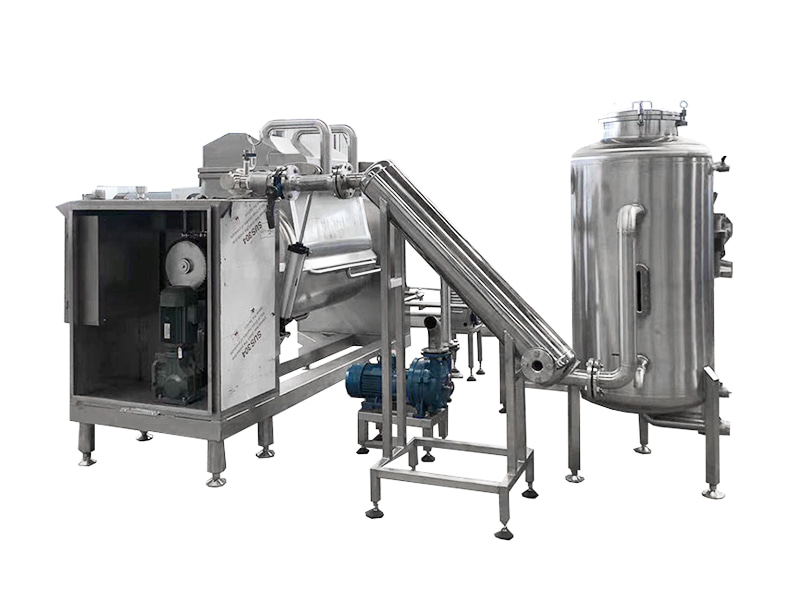
| Component | Function |
|---|---|
| U-shaped pot body | Contains the product; steam jacket on the outer wall provides even heat transfer |
| Horizontal agitator shaft & arms | Folds and kneads the product; slow-speed design preserves particle integrity |
| Industrial gearbox & motor | Delivers high torque at low RPM (typically 8–25 rpm) for dense materials |
| Steam inlet & condensate outlet | Manages steam supply and drainage to the heating jacket |
| Lid & lid-opening motor | Motorized lid lifts safely; on vacuum models, also creates the pressure seal |
| Vacuum pump (vacuum models only) | Lowers internal pressure to reduce boiling point to 60–80°C |
| Control panel | Manages agitator speed, steam valve, temperature, vacuum level, and timers |
A horizontal cooking mixer should be placed on a level, structurally sound floor capable of supporting the fully loaded weight of the machine. The steam supply line must be connected to the jacket inlet and rated for the machine's design pressure — for most industrial horizontal mixers, this is 0.3 MPa. The condensate return line, electrical supply, and on vacuum models the vacuum pump connection, should all be confirmed by a qualified technician before the first trial run.
Confirm all bolts and fasteners on the agitator, gearbox, and lid hinge are tight.
Manually rotate the agitator by hand (with power isolated) to verify it moves freely without binding.
Check that the steam jacket is free of blockages and that the condensate drain valve opens correctly.
Fill the gearbox with the manufacturer-specified lubricant to the correct level.
On vacuum models, run the vacuum pump briefly with the lid sealed to confirm the system can reach and hold the target negative pressure.
Run a clean water trial batch to verify temperature control, agitator speed settings, and lid operation before any food product is used.
Correct operation of a horizontal cooking mixer follows a clear sequence. Skipping or rushing any stage risks product quality, equipment damage, or operator safety.
Open the steam supply valve slowly to allow steam to enter the jacket gradually. Rapid pressurization causes thermal stress on the vessel walls. Allow the inner pot to reach a stable pre-heat temperature (typically 60–80°C for standard batches) before adding ingredients. This prevents cold spots that can cause product to stick.
A horizontal mixer should never be filled beyond its rated load capacity. For standard materials, filling to 60–70% of the pot volume is typical. For extremely dense, high-viscosity pastes, 50% or less is recommended to avoid excessive torque on the agitator drive. Overloading is one of the most common causes of gearbox damage and motor overload trips.
| Machine Volume | Recommended Load (standard) | Recommended Load (high-viscosity) |
|---|---|---|
| 300 L | 80–180 kg | 80–130 kg |
| 500 L | 100–270 kg | 100–180 kg |
| 600 L | 120–320 kg | 120–200 kg |
| 800 L | 150–450 kg | 150–250 kg |
| 1000 L | 200–580 kg | 200–320 kg |
Start the agitator at a low speed setting and observe the product behavior. For most pastes and fillings, a mixing speed of 8–15 rpm is appropriate for the initial blending phase. As the product heats and its viscosity decreases, the speed can be increased gradually up to the maximum rated RPM if needed. Abrupt speed increases stress the drive system and should be avoided.
A horizontal cooking mixer uses the steam jacket to transfer heat into the product indirectly. The temperature in the pot rises more slowly than a direct-flame system, which is an advantage for delicate products but requires operators to be patient. Monitor the product temperature using the built-in thermometer, not just the steam pressure gauge. Steam pressure and product temperature are not the same value, especially at the start of a batch when the product is still cold.
After the product reaches a stable temperature and the lid is confirmed sealed, the vacuum pump can be engaged. The interior pressure is drawn down progressively — typically to a vacuum level that corresponds to a boiling point of 60–80°C. Operators should never attempt to open the lid while the system is under vacuum. The vacuum must be fully released through the designated vent before any lid operation.
When the target cook time or product temperature is reached, close the steam supply valve and allow residual heat to dissipate briefly. Stop the agitator, confirm pressure or vacuum is equalized, then open the lid. Product is discharged by tilting the pot (on tilt-discharge models) or through a bottom valve. Avoid reaching into the pot while the agitator is energized under any circumstances.
Food-contact surfaces in a horizontal cooking mixer must be cleaned and sanitized after every production batch. Residue left in the pot overnight creates a risk of bacterial growth, cross-contamination between batches, and accelerated corrosion of the stainless steel surface. According to food safety guidance from the University of Minnesota Extension, an effective equipment sanitation routine follows five sequential steps: dry cleaning, wet cleaning, rinsing, sanitizing, and drying. Skipping any step reduces the effectiveness of the steps that follow.
Isolate power and release pressure/vacuum. Before any cleaning begins, follow the lockout/tagout procedure required by OSHA 29 CFR 1910.147. Shut off steam, release any vacuum, and confirm the agitator cannot rotate.
Remove bulk residue. Use a food-grade scraper or stiff brush to remove as much product residue from the pot wall, agitator arms, and shaft seal area as possible before introducing water. This reduces the load on the cleaning solution and speeds up the process.
Rinse with warm water. A warm water rinse (not boiling — sudden temperature changes can stress the metal) loosens remaining product and removes loose particles.
Apply food-grade detergent and scrub. Use a food-grade alkaline or neutral detergent appropriate for stainless steel. Scrub the inner pot wall, the agitator arms, and the shaft seal area with a non-abrasive brush or cloth. Avoid steel wool or abrasive pads, which scratch the stainless steel surface and create microscopic grooves where bacteria can hide.
Rinse thoroughly. Rinse completely with clean water to remove all detergent residue. Detergent left on the surface can reduce the effectiveness of the sanitizer applied in the next step.
Sanitize. Apply a food-grade sanitizer approved for use on stainless steel. Allow the required contact time specified by the product manufacturer before rinsing or air-drying.
Air dry or wipe dry with a clean cloth. Leaving water pooled inside the pot overnight promotes corrosion, especially in the crevices around the agitator shaft seal.
The exterior of the machine, including the jacketed pot wall, the gearbox housing, and the control panel, should be wiped down with a damp cloth and food-safe sanitizer after each shift. The control panel touchscreen or buttons should never be sprayed directly with water or cleaning agents — apply the cloth away from the panel and then wipe. Water ingress into control panels is a common and preventable cause of electrical faults.
A horizontal cooking mixer is a precision piece of industrial equipment. Like any machine with rotating components, high temperatures, and exposure to corrosive food products, it requires a structured maintenance schedule to remain reliable. The following schedule is a practical framework — always refer to the manufacturer's specific service manual for the exact intervals and specifications for a given model.
| Frequency | Maintenance Task | What to Check / Do |
|---|---|---|
| Daily | Visual inspection | Check for unusual vibrations, sounds, or leaks. Confirm the lid seal is intact and the steam line shows no visible drips. |
| Daily | Cleaning & sanitizing | Full clean-down of all food-contact surfaces as described in Section 4. |
| Weekly | Lubrication check | Check gearbox oil level; top up if below the minimum mark. Check agitator shaft seal for signs of product leakage or grease depletion. |
| Weekly | Fastener inspection | Check all visible bolts on the agitator arms, gearbox mounting, and lid hinge for tightness. Vibration loosens fasteners over time. |
| Monthly | Seal and gasket inspection | Inspect the agitator shaft seal, lid gasket, and steam pipe joints for wear, cracking, or deformation. Replace any degraded components. |
| Monthly | Steam system check | Inspect the steam trap, condensate drain, and pressure relief valve. Confirm the safety valve opens at the correct set pressure. |
| Monthly | Vacuum system (vacuum models) | Check vacuum pump oil level and condition. Inspect vacuum pipes and fittings for leaks. Confirm the system reaches its rated vacuum level within the expected time. |
| Quarterly | Gearbox oil change | Drain and replace the gearbox lubricant with the manufacturer-specified grade. Note any metal particles in the drained oil, which indicate internal wear. |
| 6 months | Bearing inspection | Check agitator shaft bearings for play, noise, and heat during operation. Repack or replace bearings as required. |
| Annually | Full mechanical overhaul | Disassemble the agitator drive assembly; inspect all wear parts; replace shaft seals, gaskets, and bearings as a preventive set; re-calibrate the control system. |
| Annually | Steam jacket pressure test | Have the steam jacket inspected by a qualified engineer. Confirm that wall thickness and weld integrity meet pressure vessel standards for the rated operating pressure. |
Lubricants in a horizontal cooking mixer must be food-grade where there is any possibility of contact with the product — particularly at the agitator shaft seal. NSF H1-classified lubricants are designed for incidental food contact and are the appropriate choice for these positions. Non-food-grade industrial lubricants should only be used in locations where contamination of the product is physically impossible, such as the exterior of a sealed gearbox housing.
The inner pot and agitator of an industrial horizontal cooking mixer are constructed from food-grade stainless steel, typically 304 or 316 grade. These materials are selected because they resist corrosion from food acids and cleaning chemicals, are non-porous, and can be polished to a smooth surface that does not harbor bacteria. However, stainless steel is not indestructible, and certain operating practices accelerate its degradation.
Chloride-heavy products: High-salt or high-chloride ingredients, such as pickled products or heavily salted meat fillings, are more corrosive to 304 stainless steel. Production lines processing these ingredients frequently should consider upgrading to 316-grade steel, which contains molybdenum for enhanced chloride resistance.
Abrasive cleaning tools: Steel wool, wire brushes, and coarse scouring pads scratch the polished surface and create sites for corrosion and bacterial adhesion. Use only nylon brushes or soft cloths on food-contact surfaces.
Bleach left in contact for extended periods: Chlorine-based sanitizers are effective but should not be left to soak on stainless steel surfaces for long periods. Rinse the surface after the required contact time.
Pooled water in crevices: Water left standing in the shaft seal area or in the bottom of the pot after cleaning promotes pitting corrosion over time. Always drain and dry the pot after washing.
| Problem | Likely Cause | Recommended Action |
|---|---|---|
| Motor trips or overloads mid-batch | Product load too heavy; viscosity too high for current setting; mechanical binding | Reduce batch size; check for foreign material in the pot; inspect agitator for mechanical interference |
| Uneven cooking or cold spots | Steam trap blocked; condensate not draining; steam supply pressure too low | Service the steam trap; confirm condensate drain is clear; verify steam supply pressure at the inlet |
| Product leaking past agitator shaft seal | Shaft seal worn or degraded | Replace the shaft seal immediately — product entering the gearbox causes rapid bearing damage |
| Vacuum not reaching target level (vacuum models) | Lid gasket leak; vacuum pump oil depleted or contaminated; vacuum pipe joint leak | Inspect and replace lid gasket; change vacuum pump oil; check all vacuum fittings with soapy water for bubbles |
| Unusual noise from gearbox | Low oil level; bearing wear; foreign material in drive train | Check oil level immediately; if noise persists after oil top-up, schedule gearbox inspection |
| Lid difficult to open or close | Lid hinge worn; lid motor fault; lid gasket swelling due to product contamination | Lubricate hinge; inspect lid motor and limit switches; clean and inspect gasket |
| Burning or scorching on pot wall | Product level too low; agitator speed too slow; batch running too long without moisture replenishment | Maintain minimum product depth; adjust agitator speed; add controlled amounts of water or steam injection if the recipe allows |
A horizontal cooking mixer operates at elevated temperatures and pressures and involves rotating machinery. A clear set of safety rules — consistently followed by every operator — prevents the most serious accidents.
Before any person enters the pot area, reaches in to clean the agitator, or performs any adjustment to the machine while it is not in production, a proper lockout/tagout (LOTO) procedure must be followed. This means de-energizing the electrical supply to the motor and control panel, releasing steam pressure in the jacket, releasing any vacuum, and physically locking the energy isolation points so the machine cannot be restarted accidentally while someone is working on it. OSHA standard 29 CFR 1910.147 requires documented LOTO procedures for all machinery where unexpected startup could cause injury, including industrial mixing equipment. Failure to follow LOTO procedures is one of the most frequently cited OSHA violations in food manufacturing facilities.
Operators working around a hot cooking mixer should wear heat-resistant gloves when handling product or touching the outer pot surface during or after operation. Non-slip footwear is essential in any area where steam condensation or product spills may create wet floors. Eye protection is recommended when cleaning with chemical sanitizers.
Most modern horizontal cooking mixers include interlocks that prevent the agitator from running when the lid is open, and that prevent the lid from opening when the vacuum system is pressurized. These interlocks should never be bypassed or defeated. If an interlock is malfunctioning, the machine should be taken out of service until it is repaired by a qualified technician.
XINYE specializes in industrial horizontal cooking mixers and vacuum horizontal cooking mixers for high-viscosity and heat-sensitive food production. From bean paste and meat fillings to premium fruit jams, XINYE engineers configure the right solution for each production line.
Request a Free Quote from XINYE →A well-maintained horizontal cooking mixer made from food-grade stainless steel is designed to operate reliably for 10–15 years or more under continuous industrial production conditions. The decisions that have the biggest impact on service life are largely made in the first year of operation, when maintenance habits are established and any design or installation issues are corrected.
Never exceed the rated load capacity. Overloading a horizontal mixer is the single fastest route to premature gearbox failure. If production volumes require more capacity, the correct solution is a larger machine, not overloading the existing one.
Change gearbox oil on schedule. Contaminated or depleted gearbox oil accounts for a very high proportion of premature gearbox and bearing failures in industrial mixing equipment. Mark the oil change dates on the machine and adhere to them.
Replace shaft seals proactively. A shaft seal showing early signs of wear or minor leakage should be replaced before the next production season, not run until it fails completely. A seal replacement is a minor scheduled maintenance task; a gearbox rebuilt due to product contamination is a major unplanned repair.
Keep a maintenance log. Recording what was done, what was found, and what was replaced at each service interval allows the maintenance team to spot trends — for example, if bearings are being replaced more frequently than expected, it may indicate an alignment problem or a chronic overload condition that should be investigated.
Source genuine replacement parts. Seals, gaskets, and bearings that are not specified for the operating temperatures and pressures of the machine may fail earlier than expected. Always use parts from the original manufacturer or verified equivalent suppliers.
An industrial horizontal cooking mixer is a robust, purpose-built machine for food products that require both cooking and heavy-duty mixing at the same time. Used correctly — with proper loading, controlled heating, and careful speed management — it delivers consistent, high-quality results for demanding products like bean paste, meat fillings, and premium jams. Maintained correctly — with daily cleaning, weekly lubrication checks, monthly seal inspections, and annual overhauls — it will serve a production line reliably for well over a decade. The investment in training operators and establishing a disciplined maintenance program pays back many times over in avoided downtime, reduced repair costs, and consistently excellent product quality.
How often should a horizontal cooking mixer be cleaned?
The inner pot and agitator should be cleaned and sanitized after every production batch. A deeper inspection and lubrication check should be done weekly, while a full mechanical overhaul is recommended every 6–12 months depending on usage intensity.
What is the difference between a standard and a vacuum horizontal cooking mixer?
A standard horizontal cooking mixer operates at normal atmospheric pressure with steam heating. A vacuum horizontal cooking mixer lowers the internal pressure so that boiling occurs at just 60–80°C, protecting heat-sensitive ingredients like fruit jams from color loss, oxidation, and nutrient degradation.
What foods is a horizontal mixer best suited for?
Horizontal cooking mixers excel at high-viscosity materials such as bean paste, lotus paste, meat fillings, chili sauce, thick jams, and mooncake fillings — products too dense for a vertical stirring kettle to handle without stalling.
How do operators prevent the mixer motor from overloading?
Operators should keep the load within the rated capacity (50–60% fill for very dense materials), allow the motor to reach operating temperature before adding the full batch, and monitor the current meter. If the motor trips, the cause should be identified before restarting.
Is it safe to open the lid while the horizontal mixer is running?
No. The lid must never be opened while the agitator is in motion. On vacuum models, the vacuum must first be fully released and the vessel depressurized. Always apply the lockout/tagout procedure before any cleaning or maintenance that requires entering the pot area.
What steam pressure should be used for a horizontal cooking mixer?
Most industrial horizontal cooking mixers are designed for a steam jacket working pressure of 0.3 MPa. Operators should always verify the rated pressure on the equipment nameplate and never exceed it. Steam pressure should be built gradually at startup to prevent thermal shock to the vessel.
How long does a horizontal cooking mixer last?
A properly maintained horizontal cooking mixer in food-grade stainless steel typically lasts 10–15 years or more in continuous industrial use. Lifespan depends on ingredient corrosiveness, cleaning frequency, lubrication quality, and adherence to a scheduled maintenance program.

 Phone:0086-15908033216
 E-mail: olivia.xinye@gmail.com
 Whatsapp/WeChat: +86 15169588915
 ADD: No.78, Jianqiao Road, Shunwang Sub-district, Zhucheng City, Weifang City, Shandong Province
Customer Message
Designed by Zhonghuan InternetCopyRight © 2026 ZHUCHENG XINYE MACHINERY CO., LTD. All rights reserved All tags Sitemap