Vacuum cooking systems operate at absolute pressures of 0.04-0.09 MPa (equivalent to 600-900 mbar below atmospheric), reducing water's boiling point to 45-85°C depending on product dissolved solids content. This physical state change creates processing capabilities impossible under atmospheric conditions.
The engineering implementation requires three integrated subsystems:
Vacuum generation: Liquid ring pumps (robust, tolerant of vapor) or dry screw pumps (lower operating cost, higher initial investment) achieving 95-99% vacuum efficiency
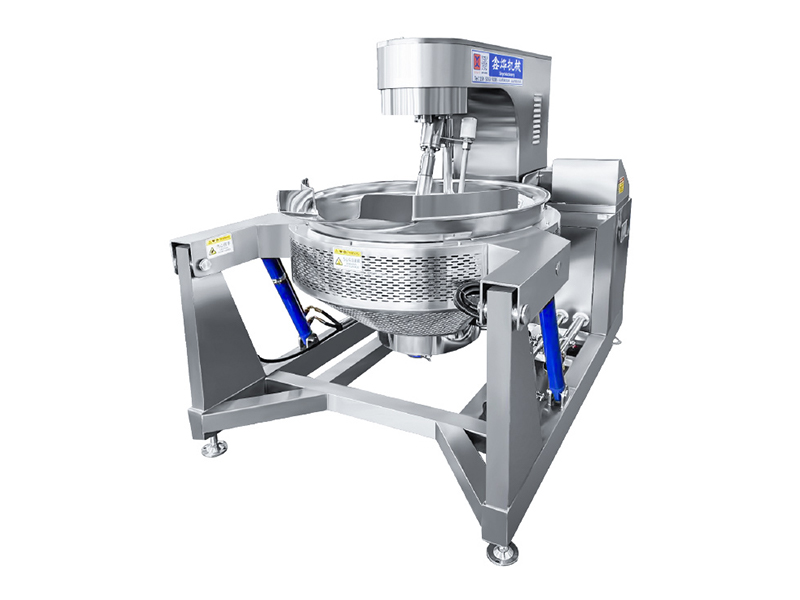
Heat transfer: Jacketed vessel with circulating thermal fluid, or direct steam injection with flash evaporation control
Condensation recovery: Surface condensers or direct-contact condensers capturing volatilized aromatics and water vapor
Performance Comparison: Vacuum vs. Atmospheric Processing
| Parameter | Atmospheric Kettle | XINYE Vacuum Mixer | Advantage Magnitude |
|---|
| Maximum cooking temp | 100-105°C | 60-80°C (adjustable) | 25-40°C reduction |
| Color retention (anthocyanins) | 45-60% | 85-95% | 40-35% improvement |
| Volatile compound loss | 35-50% | 5-12% | 30-38% reduction |
| Energy consumption (evaporation) | 1.15 kWh/kg water | 0.78 kWh/kg water | 32% reduction |
| Sugar requirement (standard jam) | 55-65% | 35-45% | 20 point reduction |
| Vitamin C retention | 15-25% | 60-75% | 45-50% improvement |
Product-Specific Applications
High-Value Fruit PreservesStrawberry, raspberry, and cherry products benefit disproportionately from vacuum processing due to their anthocyanin content and delicate aromatic profiles. The 40-60°C processing window preserves the "fresh-cooked" character that commands 30-50% price premiums in specialty markets.
Dairy-Based DessertsCustard, pastry cream, and milk jam production eliminates the "eggy" off-flavors caused by protein denaturation above 85°C. Vacuum processing at 75°C achieves equivalent microbiological reduction with superior organoleptic properties.
Functional Ingredient ExtractionVacuum conditions enhance extraction efficiency for pectin, essential oils, and bioactive compounds. XINYE systems with integrated condensers recover these fractions as separate high-value product streams rather than venting to atmosphere.
Pharmaceutical and Nutraceutical ApplicationsTemperature-sensitive APIs (active pharmaceutical ingredients) and probiotic cultures require the precise thermal control that vacuum processing provides. XINYE's sanitary design (ASME-BPE compliant) supports cGMP manufacturing environments.
Equipment Selection Criteria
| Production Scale | Recommended Configuration | Key Features | Investment Range |
|---|
| Pilot/R&D (10-50L) | Benchtop vacuum mixer | Data logging, recipe development | $15,000-$35,000 |
| Small commercial (100-300L) | Single-batch vacuum mixer | Semi-automated operation | $45,000-$85,000 |
| Industrial (500-2000L) | Continuous vacuum system | CIP, condensate recovery, SCADA | $150,000-$400,000 |
| Turnkey line | Integrated with upstream/downstream | Full automation, traceability | $500,000-$2M |
Operational Considerations
Vacuum Level Selection
High vacuum (0.04-0.06 MPa): Maximum temperature reduction for heat-sensitive products (probiotics, enzymes, natural colors)
Medium vacuum (0.06-0.08 MPa): Optimal for most fruit applications—balance of evaporation rate and quality preservation
Low vacuum (0.08-0.09 MPa): Gentle processing for high-solids products where excessive boiling would cause splashing
Condensate Recovery Economics
XINYE's standard condensate recovery system captures 12-18% of input weight as aromatic water or juice concentrate. For a 1,000L strawberry jam batch:
Recoverable volume: 120-180 liters
Brix concentration: 8-15°Brix (depending on operating pressure)
Value recovery: $240-$540 per batch at wholesale juice pricing
Payback period: 8-14 months for condensate system upgrade
Common Misconceptions
"Vacuum cooking is slower"While individual batch cycle time may extend 15-25% due to vacuum pull-down and controlled heating, net daily throughput often increases due to elimination of burn-on cleaning delays and reduced rework from quality failures.
"Vacuum equipment requires specialized operators"Modern XINYE systems operate via recipe-driven HMI interfaces. Once programmed, operators select product codes and confirm batch parameters—no vacuum physics knowledge required for routine operation.
"All products benefit equally from vacuum processing"High-starch products (corn syrup, certain puddings) may exhibit undesirable texture changes from vacuum processing. XINYE's application engineering team provides product-specific feasibility testing.
Maintenance Protocols
Daily
Weekly
Filter cleaning/replacement
Gasket integrity verification
Calibration of pressure and temperature sensors
Quarterly
Vacuum pump service (oil change or seal inspection)
Heat exchanger descaling (if water hardness >150 ppm)
Control system validation
Decision Framework
Vacuum cooking technology represents justified investment when:
Product selling price exceeds $3/kg (margin supports quality premium)
Daily production exceeds 500kg (amortization threshold)
Color, flavor, or nutritional retention is marketed to consumers
Clean label positioning (no artificial colors, reduced sugar) is strategic priority
Export markets require extended shelf life without chemical preservatives
Conclusion
Vacuum cooking technology transforms thermal processing from a necessary degradation step into a quality enhancement tool. For processors competing on premium positioning, nutritional claims, or clean label credentials, the technology transition from atmospheric to vacuum processing is becoming competitive necessity rather than optional upgrade.









 Phone:0086-15908033216
 E-mail: olivia.xinye@gmail.com
 Whatsapp/WeChat: +86 15169588915
 ADD: No.78, Jianqiao Road, Shunwang Sub-district, Zhucheng City, Weifang City, Shandong Province